






The content of this website is for general information purposes only.
Hosachiguru Enterprises Pvt. Ltd. (HEPL) makes all reasonable efforts to include accurate and up-to date information on this Website. However, HEPL does not make any warranties or representations express or implied, as to the timeliness, accuracy or completeness of the information contained or referred to on its web-site and therefore, any advice or information received via this web site should not be acted upon without consulting our sales team.
Any access and use of this site is and will be at the risk of the User and neither HEPL nor its directors / employees shall be liable or responsible for any loss or damage arising directly or indirectly (including special, incidental or consequential loss or damage) from the use of this website howsoever arising including due to any unavailability of the website or any part thereof or any contents or associated services or any computer viruses or technical bugs.
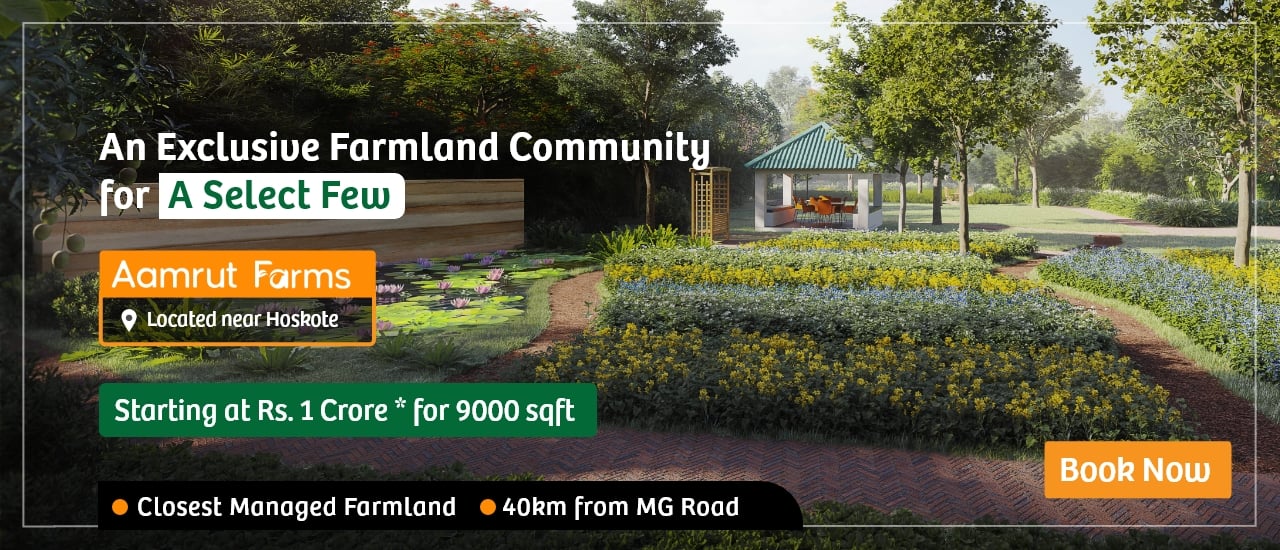
It is the constant endeavour of HEPL to enhance the experience of its Users and hence HEPL reserves the right to make any changes in any way, at any time and for any reason, without prior notice, to the contents and information on this site, including materials, designs, equipment, specifications, prices and/or availability, brochures and interactive plans etc. It is clearly understood that dimensions and floor plan layouts are approximate and Computer generated images; walkthroughs and render images are design concepts only. Images are for illustrative purpose only and view shots are representational and are not intended to reflect actual views from any particular unit.
References in this website to any amenities, activities or services, including various projects, various initiatives taken by HEPL, CSR activities etc. are to be read as statements of fact and not as their endorsement or invitation or offer for sale or recommendation by HEPL.
Except with specific prior permission of HEPL, any reproduction, retransmission or other use of any information proprietary or otherwise on this site is strictly prohibited. Copyright in all the designs, plans, views shared on this website shall remain the property of HEPL and cannot to be used on any other work except by Agreement with HEPL.
Any use of this website and any legal dispute arising in connection therewith shall exclusively be governed by Indian law and all arbitration shall fall within the jurisdiction of Bangalore Courts.
To find out more about projects/developments, please call 080 66990055 or visit HEPL office during working hours and get in touch with its authorized sales representative.
Please note that by sharing any of the Users contact details on the website, they are authorizing the Sales Response team of HEPL to provide information about its projects over Calls, SMS & Emails.
By using this Site, the Users signify their acceptance of this disclaimer as may be modified from time to time. Users are advised not to access this site if they do not agree to the terms and conditions mentioned herein.
Welcome,
Co-Farmer.
Own a FarmPlot at Hosachiguru Farms
Fully Managed by Our Professional Team
Here, farming meets nature in perfect harmony. It is not just about growing crops; It is about taking care of our health, our environment and creating a green legacy for future generations.
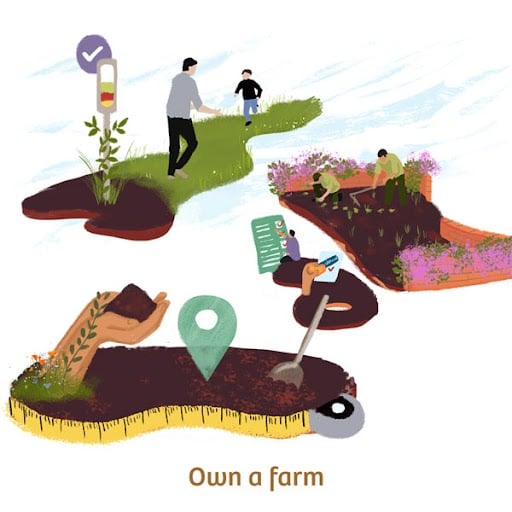


Managed Farmlands by Hosachiguru, are dedicated towards enabling city dwellers to own farmlands in
gated communities and cherish the true farm life experience.




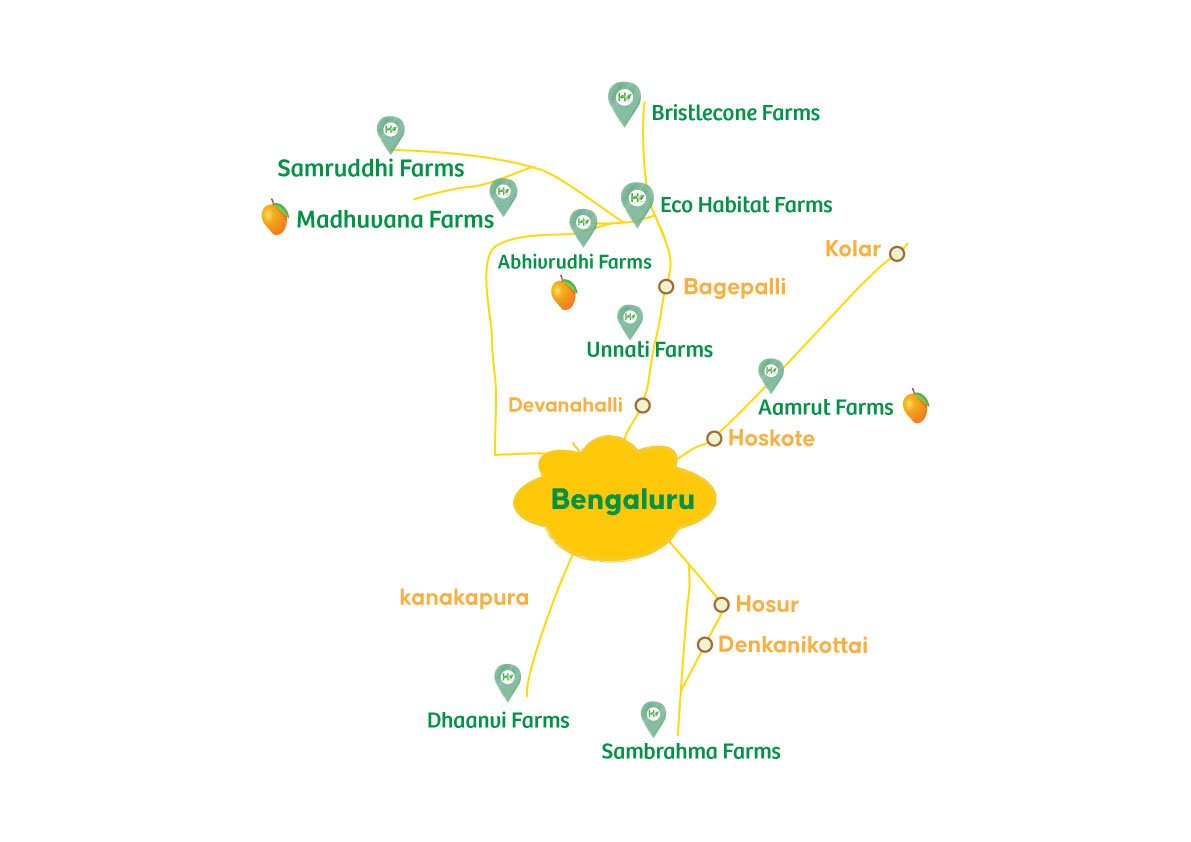
SAMRUDDHI FARMS

Direction - North Bangalore
90 mins drive from Bangalore International Airport
30 mins drive from Lepakshi Temple
12 km from Madakasira Fort
Starts at ₹17.4 Lakhs
Direction - East Bangalore
35 kms from Bangalore international airport - KIAL
35 kms from Whitefield
45 kms from Bangalore’s MG Road
Starts at Rs 1 Cr
Direction - North Bangalore
60 mins drive from Bangalore International Airport
1 hr drive from Lepakshi Temple
5 mins drive from NH44E
Starts at ₹ 26.1 Lakhs
Direction - North Bangalore
90 mins drive from Bangalore International Airport & BIEC
45 mins away from Lepakshi Temple
60 mins away from Madhugiri Fort
Starts at ₹ 14.1 Lakhs
Direction - South Bangalore
45 mins drive from South of Electronic City
25 mins drive from Hosur Airport
45 mins drive from Hogenakkal Falls
Starts at ₹ 29.4 Lakhs
Direction - South Bangalore
90 mins drive from Nice Road Junction
62 kms from Electronic City
31 kms from Mekedatu Falls
Starts at ₹ 35.3 Lakhs
Direction - North Bangalore
Starts from ₹30.7 Lakh













1300
+Co-farmers

1500
+Acres of farmland

25
+Farms
Managed farmland is a good investment, especially for urbanites. Being a limited resource with endless growth potential, this asset is the most convenient way to make your land productive for you.
Co-farmers can gain 100% convenience in farmland ownership with Hosachiguru as the team takes care of everything - from farm management to creating unique co-farmer experiences and generating healthier produce for the long-run.
Natural farming methods practiced at Hosachiguru Farms, allows plants to thrive with low mortality compared to hybrid sourced plants or commercial farming. This makes managed farmland a sustainable legacy for you and your family to cherish for generations. Managed farmland is an eco-friendly or green investment which helps restore biodiversity and retain soil health, whilst reaping healthy food for you and your loved ones.
Furthermore, managed farmland by Hosachigru are in cherry-picked locations which enjoy higher land appreciation rates than any regular commercial land found within the city.
Our Farmlands are located between 1-3 Hrs drive from Bangalore, making it a lot more accessible for the urbanites. The barren parcel of land is available from 30L to 70L per acre depending upon the distance, access from main road and other features of the land. However when we develop this land there is a lot of land that gets developed into common amenities, roads, irrigation ponds, etc. That apart, the entire infrastructure, irrigation systems, plantations and the retreat facilities are built up on the farm land.
For your reference, this price ranges from 45L to 1.3Cr per acre or from ₹101 to ₹300* per sqft. which varies depending on the project you choose to invest in. Some of the lands within city limits in yellow zone are upwards of 2.5Cr per acre and our Farm plots in these areas are 800 Rs per sft with all the developments.
Hosachiguru-managed farmlands are available to you with built-in facilities and amenities, at the cherry-picked locations of North and South Bangalore. Considering the different project locations and soil types, our projects have different price ranges as well. Here are the starting prices for our projects near North & South Bangalore for a Quarter Acre FarmPlot.
Eco Habitat : Starts from ₹26.1 Lakhs
Madhuvana : Starts from ₹14.1 Lakhs
Dhaanvi : Starts from ₹35.3 Lakhs
Sambrahma : Starts from ₹29.4 Lakhs
The rate per sqft. drops as the size of your farm plot increases.
Invest in fully managed farmlands by Hosachiguru located near North and South Bangalore. All Hosachiguru farms are located 60-90 minutes from prime locations in the North and South such as Bangalore International Airport and Electronic City.
With affordable pricing, 100% secure land, flexible payment options, 24*7 support, and 360° farm assistance from the team, this is your dream farm to build your very own green legacy for generations.
At Hosachiguru we have decoded the art, joy, and science of farming to implement the best practices for our customers while nurturing a green asset for you, that can be cherished for generations to come. In the green pockets of Bangalore, you can build your regenerative food or agro forest which is sure to be your absolute favorite, weekend getaway. HC farmlands are more than just parcels of land; here you can own a farm, grow life, and cherish farm life.
Learn why you should choose Hosachiguru as your best bet to invest in farmland.
Land, being a limited resource with endless growth potential, is a great investment option. Although, picking the right piece of land is an important aspect considering the purpose of its development. At Hosachiguru, all the locations for our managed farmlands have been carefully vetted through thorough legal verification, soil analysis, research on weather conditions, water availability and quality, etc. Hence, you do not need to worry about the multiple hassles of land verification of managed farmland by Hosachiguru. Additionally, land is an ever-growing asset and Hosachiguru managed farmland is one such green asset that enjoys a higher rate of appreciation than any urban land located near the city center.
For more detailed information, please refer to the link - https://www.hosachiguru.com/blog/what-are-the-legal-aspects-of-farmland-ownership/
It is a capital asset like any other traditional real estate. But the capital gains tax is not applicable on farmlands once they are sold. Managed Farmlands or agricultural lands are an ever-growing green asset based on the trees and crops planted for short and long-term both.
Farming is a highly important economic sector, especially in India. Its effect on our society cannot be minimized. Apart from various yields, farming is significant to the country as it is a source of livelihood for a major chunk of the Indian population. To build a healthier economy, we must understand the true significance of farming in the present scenario.
To create a sustainable balance between food production and ecology, farming should be undertaken and supported by urbanites. Farming should not be restricted to the rural sector which is not equipped to deal with the fast-changing environmental factors effectively in time. With a lack of financial resources and support, farmers are forced to grow cash crops instead of indigenous species, which results in the purchase of hybrid seeds and the use of chemical fertilizers that degrade the soil and environment. To counter these problems, Hosachiguru has introduced the concept of managed farmland in India, to enable and encourage urban people to make greening and farming a part of their lives.
Being the industry leader and pioneer, Hosachiguru’s farming concept is the perfect solution for society’s future as it enables sustainability through 3 important aspects - ecological, functional, and an experiential farmlife. With Hosachiguru, anyone can become a farmer. HC brings farming to your fingertips, allowing you to reap the big benefits of land ownership for generations while empowering on-ground farmers and restoring the natural ecosystem of the Earth in the process.
Hosachiguru is the most trusted partner in managed farmland, with 100% transparency and dedication to the cause and vision of the organization. By becoming a CoFarmer at Hosachiguru, you not only create a source of healthy and nutritious food for yourself, but you also improve the quality of the environment by reducing your carbon footprint and restoring the forest cover and natural ecosystem of Earth.
If you are planning to make a green investment, then farmlands near Bangalore are a thriving location to look out for. As Bangalore is a rapidly expanding city, the outskirts of the city is a top priority for most real estate investors. The cherry-picked locations combined with top-rated managed farmland services from Hosachiguru makes these locations the most viable option for you from an ever growing asset to ensuring you fully enjoy the fruits of labor.
Managed farmland by Hosachiguru has excellent connectivity to prime locations in Bangalore such as Bangalore International Airport, Electronic City, Hosur Airport, Kanakapura Road, etc. You will never feel alienated from the prime locations of Bangalore city since these areas are well connected by the Namma Bengaluru Metro Rail and roads.
The important point to consider is the higher rate of appreciation that you will experience at these locations. Most of the properties in Bangalore's suburbs offer a greater rate of returns at lower prices than real estate options located closer to the city center as they have already reached a certain level of saturation.
Managed farmland by Hosachiguru also offers you a wide range of experiences in a comfortable and serene landscape. A place where you can unwind and relax after a long week of city chaos, noise and pollution. Finding a home in Bangalore suburbs has its own charm and beauty.
Hosachiguru has decoded the true art, joy and science of farming, and continues to implement this process across all of its farmlands. We approach agriculture in a humane, scientific way, involving methods like zero residue farming, permaculture, sustainable farming, and precision farming.
We envision enabling and encouraging people to make farming and greening a part of their life.
Hosachiguru farm plots are more than just parcels of land. They provide you with a wealth of experience along with a green asset that can be cherished for generations to come.
Here are some of the reasons our 1000+ CoFarmers have chosen Hosachiguru to make their investment in agricultural farmland -
Hosachiguru Managed Farmlands Offer:
All these facilities and amenities, combined with our team’s dedication to serving you in the best possible way ensures every CoFarmer gains a wealth of experiences to cherish forever.
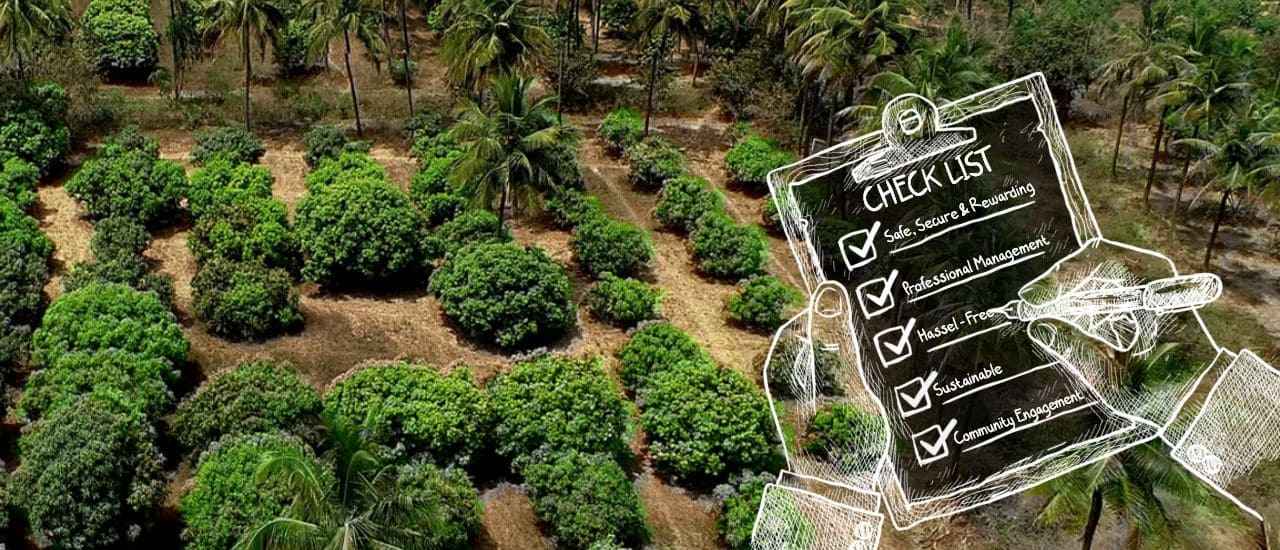
The HC Guarantee ensures we deliver farmlands that are:
Secure | Sustainable | Tech-enabled | Rewarding
Legal titles and documentation are one of the most important aspects that one should consider while investing in farmland.
At Hosachiguru we ensure that all the documentation is verified and there is absolute transparency in the system which enables the customers to make an informed decision. We are accountable and offer a 100% money back guarantee if any legal issues should arise.
With 100% transparency, our in-house legal counsel will ease all your worries as all documents are ready for your perusal and clarification upon request before you make your investment decision.
The answer is a big YES! Farmland investment is on an upswing. A few of the main reasons why farmlands today are such a hot cake are as follows:
Hosachiguru Farms are in cherry-picked locations on the outskirts of Bangalore which suggest a higher rate of appreciation compared to other, typically real estate options found closer to the city center.
The combination of clear legal titles and our hands-on team gives you the ease of ownership for your most preferred managed farm plot at Hosachiguru Farms.
Farmlands make a perfect weekend getaway destination for families and friends. You can spend quality time with family and introduce farming and its benefits to the kids in the family.
All your farm management and weekend getaway needs are taken care of by Hosachiguru - starting from intelligent water management systems and electricity lines, to modern resort stays, clubhouses, and pools. Additionally, since you are a part of the HC community as a CoFarmer, you can save way more through managed farmland at Hosachiguru due to economies of scale.
It’s a proven fact that human beings that spend time with nature and its beautiful landscape experience a heightened sense of fulfillment. The natural green hues from the farmland, coupled with peaceful farm sounds such as happy birds chirping, fresh gusts of winds, etc. helps us stay grounded and elevate our mood as well.
The most important aspect of Managed Farmland by Hosachiguru is the design philosophy adopted by the organization. With aims to restore nature in a sustainable manner, permaculture principles are implemented in all farm designs to ensure the growth of a balanced ecosystem that enhances biodiversity.
Given the nature of farmlands, they are typically located on the outskirts of the city where there is more space to nurture the land. Locations that are farther away from the city pollution result in healthier yields, and allows all life on the farm to thrive in a sustainable manner. Hosachiguru managed farmlands are located in the cherry-picked green pockets in the outskirts of Bangalore. Careful and thorough screening of the location, soil type, weather conditions, growth opportunity and resource accessibility, are some of the factors that determine the acquisition of any parcel of land by Hosachiguru. This analysis helps Hosachiguru ensure the standard of farmland is maintained as per the HC Guarantee i.e. assurance of Secure, Sustainable, Tech-enabled & Rewarding farmland for sale.
Furthermore, Hosachiguru’s managed farmlands are located in upcoming areas of the city. Buying this agricultural land near Bangalore has numerous advantages such as -
Property registrations can be an uphill battle. During any form of official documentation, the verification process and having to deal with government officials can be a cumbersome task. Hosachiguru has simplified this procedure by providing co-farmers with a truly hassle free ownership process.
From initial documentation to ownership we make sure all the boxes are ticked. 100% security is guaranteed as the team leaves no stone unturned.
Our in-house legal counsel assists in every step of the legal process. All HC farms are already acquired in the company’s name, so no third party is involved at the time of purchase. Customers share their KYC documents and attest to the sales agreement to get started with the ownership process wherein the LOI is issued. Customers can then opt for full payment or flexible payment options through EMI. Once the deal is sealed, the sales deed is issued and the necessary documentation loop is closed. Our in-house advocates accompany customers to the sub-registrar offices during the time of legal registration and transfer of ownership of the land, thereby simplifying the entire process for you.
In a few easy and secure steps our customers become a part of the Hosachiguru family.
Farmland investment is one of the most rewarding venture decisions. Managed farmland by Hosachiguru offers its co-farmers big benefits and an unmatched wealth of experience. Our objective is to create a habitat where one could rejoice in themselves and provide a source of food for their families for generations to come. Our farms are functional, Aesthetic and have a Host of amenities that creates a wealth of experience for our Co Farmers.
Hosachiguru takes into account all the undependable variables and plans the farm tending activities accordingly. This long-term approach helps maximize the yield, whilst mitigating the risk of damage, caused due to various reasons such infestation, flood, water logging or drainage and lots more.
Along with a self-sustaining green asset, co-farmers at Hosachiguru can reap the benefits of their investment in the following ways:
 Find out the Journey to become a Co-farmer
 Read more about Greening Life with Hosachiguru

 View more details